The Cut Before the Answer: Building Suspense Through Editing
A close look at how shot order, reaction, and withheld information make an audience anticipate an answer before a character receives one.
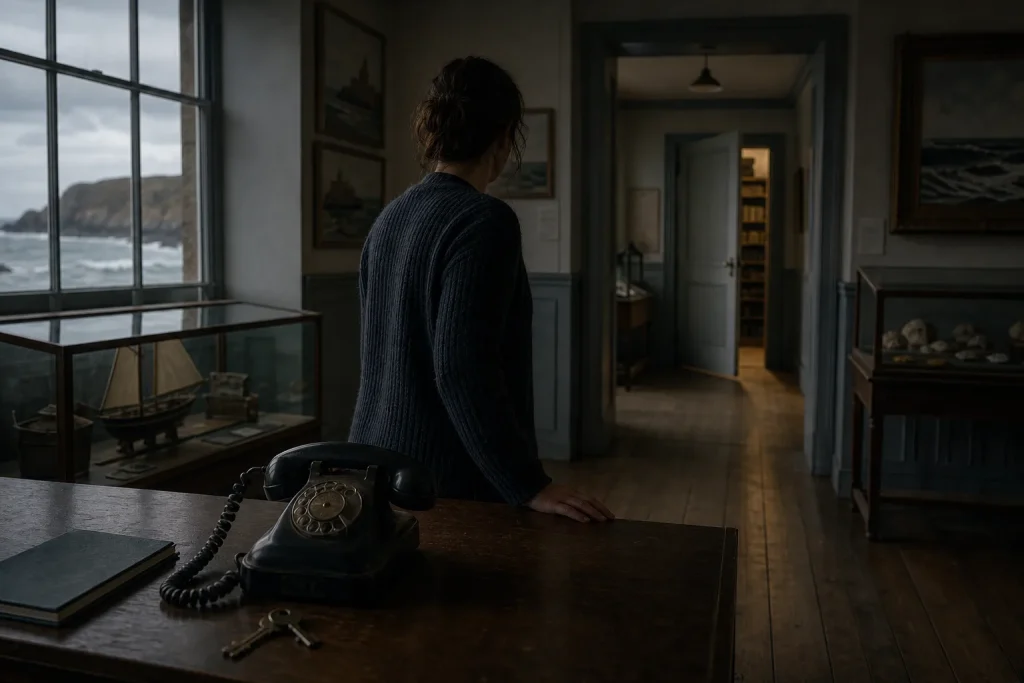
A character can reach for a ringing telephone, stop just short of lifting the receiver, and make a room feel tense before anyone speaks. The suspense does not come from the phone alone. It comes from the cut: what the film shows, what it delays, and whose knowledge arrives first. Editing can make viewers anticipate an answer while the character is still waiting for it.
Consider an invented scene: Mara, a caretaker closing a small coastal museum, hears a telephone ring in the empty gallery. She has been told that the building is secure, but a door to the archive appears ajar. The film’s editor can present this as a simple sequence of actions, or arrange the images so that viewers begin to suspect something before Mara does. The difference lies in timing and order, not necessarily in more dramatic material.
Begin with a clear question
Suspense needs a question that an audience can hold in mind. In this scene, it might be: who is calling, and is someone inside the archive? These questions are related, but they are not identical. The ringing telephone promises a voice; the open door suggests a presence. If the film introduces too many possible mysteries at once, attention scatters. If it gives away the answer immediately, anticipation has nowhere to gather.
The editor can establish the room before the ring. A wide shot shows the gallery, the telephone on the desk and the corridor leading to the archive. This is a piece of visual orientation: the audience knows where important objects and routes are. When the ring interrupts the quiet, viewers can connect the sound to a visible source and understand why Mara turns towards the desk.
That first view also gives later cuts something to change. If the archive door has already been shown standing closed, a later glimpse of it open carries meaning. If the audience has never seen the corridor, a cut to a dark doorway may be atmospheric but confusing. Suspense benefits from clarity about the physical space because the uncertainty should concern what is happening, not where everything is.
Put the audience slightly ahead
To make viewers anticipate an answer before Mara receives one, the film can give them a clue she has not yet noticed. After the telephone rings, it cuts to Mara looking across the gallery. Then it shows the archive door, open by a narrow gap. Mara remains in the foreground, unaware of it. The audience now has information that the character lacks.
This arrangement is sometimes described as dramatic irony: viewers know something a character does not. Here it creates a practical question. Will Mara see the door before she answers? The telephone becomes more than a device for delivering dialogue. It competes with the clue for her attention, and the audience has reason to watch both.
The order of shots matters. If the film first shows Mara noticing the door and then cuts to it, the audience learns the information alongside her. If it shows the door first, the audience can begin to worry while Mara behaves normally. A small change in sequence shifts the viewer’s position from observer to anticipator.
There is a limit to how much advance knowledge helps. If the film reveals a shadow moving behind the door, a hand reaching for the telephone, and a figure reflected in a glass case, it may turn anticipation into a checklist of threats. One legible clue is often stronger than several competing ones. It gives the viewer a focus without resolving the scene.
Use the reaction shot to measure the delay
A reaction shot shows how a character responds to something, or sometimes that they have not responded at all. After the image of the open door, the editor might return to Mara as she reaches for the telephone. She pauses, but the pause is not yet an answer. Does she hear a sound? Has she spotted the gap? The audience reads her face for evidence.
The timing of this return can make the pause feel longer or shorter. A quick cut back to Mara keeps the action brisk. Holding on her as she listens to the ringing allows the audience to compare her stillness with the urgent sound. If the shot lingers after she starts to turn, viewers may feel she is approaching a realisation. If it cuts away before she moves, the film preserves uncertainty.
That delay is not simply empty time. It gives the audience room to form a prediction, then keeps the prediction unconfirmed. A cut can postpone the answer by shifting attention to another object: the phone’s coiled cord, a key on the desk, or the strip of darkness beyond the archive door. Each insert directs attention, but it should also change the question or sharpen the existing one.
Imagine the editor cuts from Mara’s hand hovering over the receiver to the door gap, then back to her eyes. The sequence invites viewers to connect her hesitation with the clue, even if the story has not yet shown that she sees it. The audience may expect her to turn away from the phone. If she instead lifts the receiver, the choice feels consequential because the edit has made the alternative visible.
Let sound carry across the cut
Sound can connect shots that the image separates. The telephone may continue ringing while the film cuts from Mara to the open door. Because the sound persists, the audience experiences the door image as part of the same urgent moment rather than as a new scene. Editors call this kind of continuation a sound bridge: audio carries across a visual change and binds the shots together.
The ringing can also control the pace without requiring rapid cutting. If it repeats at an even interval, the gaps between rings become small stretches in which the audience studies Mara’s movements. A cut can arrive just before the next ring, making viewers wait for both the sound and the action. The scene’s rhythm comes from the relationship between image and audio, not from a universal rule that faster cutting always means greater suspense.
Silence can be useful, too, but its placement matters. If the telephone stops before Mara answers, the audience may wonder whether the caller has hung up or whether the line has failed. If the ringing continues as she takes the receiver, the film sustains the immediate question of who is calling. Each choice gives the scene a different kind of pressure. The sound should help define what the viewer is waiting to learn.
For a plain analogy, think of a kettle that has begun to whistle while you are looking for the mug. The sound keeps the unfinished task present even when your eyes are elsewhere. In a suspense scene, a continuing ring can do similar work: it holds one demand in the viewer’s attention while the edit directs the eyes towards another.
Shape the reveal through shot order
Suppose Mara finally lifts the receiver. The editor still has choices about when to show the person on the other end. One option is to stay on Mara as she listens, letting the audience receive only her expression and perhaps a fragment of the caller’s voice. Another is to cut to a view of the empty reception area, suggesting that the call may have come from inside the building. A third is to reveal the caller at once.
Each version answers a different question. Showing Mara’s face may tell viewers that something has surprised her, but not what she heard. Showing the empty reception area may make the call’s source seem impossible or concealed. Showing the caller resolves the source while leaving the caller’s purpose open. Editing is not merely a way of withholding information; it chooses which part of the uncertainty remains.
For the invented scene, picture the editor staying on Mara. She says, “Hello?” The audience hears a faint scrape through the receiver. Her gaze shifts towards the archive door. Only then does the film cut to the door, which is now fully open. The sound has prompted her look, and the look motivates the next image. The cut gives viewers a clue and confirms that Mara has noticed it, but it still does not show who or what is inside.
If the film had shown the open door before the scrape, the new image might feel like a reminder. By placing the sound first, then Mara’s response, then the door, the sequence turns the shot into a discovery. The audience and character arrive at the same image by slightly different routes: viewers have been watching the door already, while Mara has just been drawn to it.
Keep each delay meaningful
A delayed answer can sustain attention, but repeated delays lose force if they do not alter what the audience understands. Suppose the film cuts from Mara to the door, then to the phone, then back to Mara, only to repeat the same arrangement several times. The viewer may recognise the pattern and feel that the scene is circling. A fresh cut should add information, change an expectation or make an existing choice more urgent.
That does not mean every shot must deliver a plot clue. A held image can make a character’s decision clearer. The time Mara spends with her hand on the receiver may show that she is choosing whether to answer, not merely hesitating for suspense. A cut to the key can remind viewers that she could lock the archive door. The object matters because it gives her another possible action.
For a short worked sequence, imagine these shots: the gallery is established; the phone rings; Mara turns; the archive door is shown ajar; Mara reaches for the receiver; the ringing continues; she answers; a scrape sounds; Mara looks towards the archive; the door is revealed as fully open. The sequence begins with a clear space, gives the audience a clue ahead of the character, delays the caller’s answer, then uses sound and reaction to bring Mara to the same discovery. Its suspense comes from an ordered chain of attention.
Changing one link changes the effect. If the door is shown only after Mara looks towards it, viewers do not anticipate her discovery. If the scrape comes before she answers, they may suspect the threat is in the gallery rather than on the line. If the film reveals a person inside the archive before the call, the scene becomes less about waiting for an answer and more about whether Mara will notice the danger.
End the scene with a new choice
The result of the sequence need not be a complete explanation. The caller may remain unidentified, and the archive may remain unseen. What matters is that the audience’s expectation has changed. At the start, viewers want to know who is calling. By the end, they may be asking whether Mara will enter the archive, call for help or leave the building.
This is how an answer can lead into a more urgent question. Mara has answered the telephone, but the conversation may have supplied a sound rather than an explanation. She has noticed the open door, but she does not yet know what is behind it. The editor has moved the scene forward without closing every uncertainty.
When shaping suspense, track what the audience knows at each cut and what the character knows at the same moment. Give the viewer enough information to form a prediction, then make the next image or sound test that prediction. In the museum scene, the open door is not suspenseful in isolation. It becomes suspenseful because viewers see it before Mara, hear the phone continue to ring, and have time to wonder which demand she will answer first.